
Can Old Stains Be Removed? Here’s the Honest Answer
- meganrstrom
- Jan 28
- 3 min read
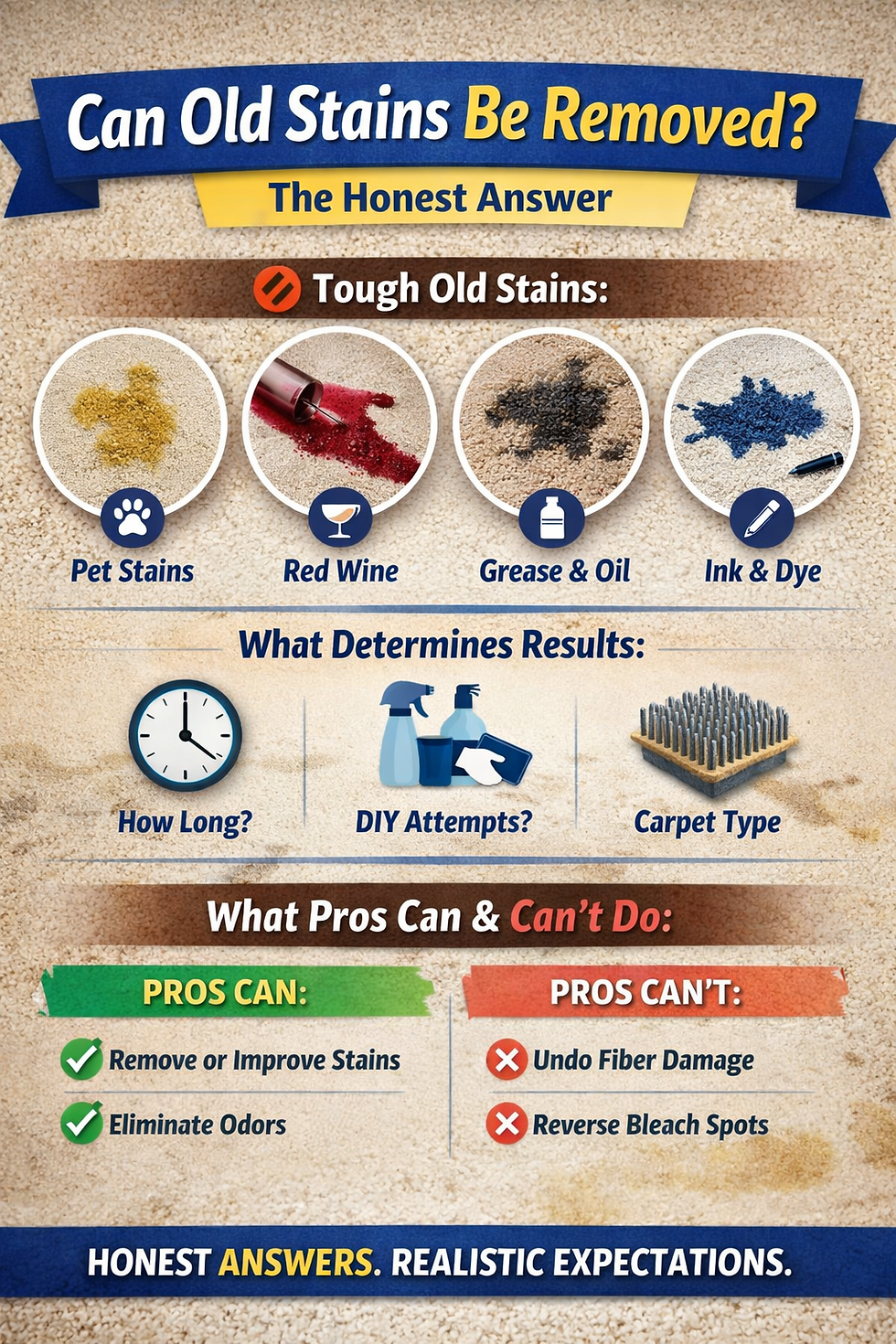
If you’ve ever looked down at your carpet and wondered, “Is that stain ever coming out?” — you’re not alone. One of the most common questions professional carpet cleaners hear is whether old stains can actually be removed, or if they’re permanent.
The honest answer? Sometimes yes, sometimes no — and here’s why.
Understanding what affects stain removal can save you frustration, set realistic expectations, and help you protect your floors long-term.
What Makes a Stain “Old”?
An “old” stain isn’t just about age — it’s about what’s happened since the spill occurred.
A stain becomes more difficult to remove when:
It’s been left untreated for weeks or months
It has soaked deep into the carpet backing or padding
DIY cleaners were used incorrectly
Heat was applied (like hot water or steam before proper treatment)
Over time, many stains bond chemically with carpet fibers, making full removal harder — but not always impossible.
Types of Old Stains (And How They Behave)
Not all stains are created equal. Some respond very well to professional treatment, while others are more stubborn.
🐾 Pet Stains
Pet urine is one of the trickiest issues because it’s often more than a visible stain. Even if the discoloration fades, odor-causing bacteria may remain below the surface.
✔️ Often removable⚠️ Odors may require specialized enzyme treatments❗ Padding contamination can limit results
☕ Food & Drink Stains
Coffee, soda, wine, and juice can usually be improved — especially if they weren’t overheated during DIY cleaning.
✔️ High success rate with professional methods⚠️ Some dyes may permanently discolor fibers
🛢️ Grease & Oil Stains
Grease binds tightly to carpet fibers and can spread when treated incorrectly.
✔️ Possible to improve or remove⚠️ Depends on fiber type and prior attempts
🎨 Dye-Based Stains (Ink, Hair Dye, Bleach)
These are the most unpredictable.
⚠️ May only fade, not fully disappear❗ Bleach damage is permanent (cleaning can’t reverse color loss)
Why DIY Cleaning Can Make Old Stains Worse
We get it — grabbing a store-bought cleaner feels like the fastest fix. But many old stains become permanent because of well-meaning DIY attempts.
Common mistakes include:
Scrubbing too aggressively
Using the wrong cleaner for the stain type
Applying heat too early
Over-wetting the area
Once fibers are damaged or dyes are set, even professional cleaning has limits.
What Professional Carpet Cleaning Can (and Can’t) Do
A professional cleaning company brings:
Specialized stain-identification
Commercial-grade solutions
Targeted treatments based on fiber type
Honest expectations upfront
💡 What pros can do:
Remove or significantly improve many old stains
Eliminate odor-causing bacteria
Prevent stains from worsening
🚫 What pros can’t do:
Reverse fiber damage
Restore color lost to bleach
Guarantee 100% removal in every case
And that honesty matters.
When Replacement Might Be the Better Option
If a stain:
Has destroyed the carpet fibers
Has soaked deeply into the padding
Covers a large visible area
A professional cleaner may recommend partial replacement, patching, or area rugs instead of repeated cleanings.
That’s not a failure — it’s good advice.
The Best Way to Prevent Old Stains
The easiest stains to remove are the ones that never get old.
✔️ Blot spills immediately✔️ Avoid heat and harsh chemicals✔️ Schedule professional cleaning every 6–12 months✔️ Treat pet accidents quickly
Regular maintenance dramatically increases stain removal success.
The Bottom Line
So — can old stains be removed?
👉 Sometimes, yes.👉 Sometimes, they can only be improved.👉 Sometimes, they’re permanent.
A trustworthy carpet cleaning company won’t promise miracles — they’ll give you honest answers, realistic expectations, and the best possible result for your specific situation.
And that’s exactly what protects your floors and your peace of mind.


Comments